
Baixa Uncovered: A Walking Tour Through Lisbon’s Neoclassical Core
Updated: Feb 4
Wandering Through Lisbon: A Journey of Hills, History, and Heart
There’s something undeniably magnetic about Lisbon. It has a way of making you feel both at home and transported all at once. What makes Lisbon special isn't just the sights—it’s the pace. Life moves a little slower here. The city is approachable, affordable, and endlessly photogenic. Even getting a bit lost becomes part of the adventure. Lisbon is a city built from a mosaic of unique neighborhoods & districts, each with its own distinct personality, history, and vibe. Instead of feeling like one big uniform city, Lisbon’s charm comes from how these diverse areas weave together to create a rich, layered experience.

At This Café Life, transparency matters. We want you to know that some of the links on our website are affiliate links. This means that if you click on a link and book travel, buy a product, or sign up for a service, we may earn a small commission — at no extra cost to you.
Baixa Pombalina
Baixa is the historic downtown district, rebuilt in a neoclassical grid layout after the 1755 earthquake under the direction of the Marquis of Pombal. It’s one of Lisbon’s most iconic and walkable areas, filled with elegant plazas, wide boulevards, tiled façades, and classic cafés. What You’ll Find in This Guide:

Historical Highlights
Rossio Square (Praça do Rossio)
Commerce Square (Praça do Comércio)
Rua Augusta Arch (Arco da Rua Augusta)
Square of the Fig Tree (Praça da Figueira)
Elevador de Santa Justa
Church of St. Dominic (Igreja de São Domingos)
Rossio Square (Praça do Rossio) - A highlight of the Baixa district, the Rossio Square is the heart of Lisbon. The name “Rossio” comes from the Latin recensare - “to gather” - and since the 13th century, it’s been the stage for everything from markets, parades, medieval jousts to modern-day protests. The square and its surrounding streets are packed with some of the city’s most famous restaurants, bars, and shops. After the 1755 earthquake and tsunami, much of the square was rebuilt in the elegant Pombaline architectural style, under the direction of the Marquis of Pombal.
Column of Pedro IV - In the center of Rossio Square sits the Column of Pedro IV of Portugal, known as “the Soldier King”. At the base of the pillar are four female figures that represent the King’s various qualities: Justice, Wisdom, Strength, and Moderation.
Dona Antonia Maria II National Theatre - The National Theatre D. Maria II was founded in 1842. It replaced the old Estaus Palace, the headquarters of the Portuguese Inquisition since the mid-fifteenth century. On top of the Theatre’s façade is a statue of Gil Vicente, a Portuguese playwright, and father of the country’s theatre.

Rossio Railway Station - On the left-hand side of the National Theatre is the Rossio Railway Station, built in 1887. Its façade is striking with an unusual entrance. The trains to Sintra depart from this train station.
Walking Tour of Baixa
Estimated Duration: Approximately 2 to 3 hours (mostly flat terrain)
Rossio Square (Praça Dom Pedro IV) (Starting Point) - A historic square, a central hub since the Middle Ages. Admire the wave-patterned cobblestones and the National Theatre D. Maria II. Exit Rossio Square to the east onto Rua Dom Duarte; the square is directly ahead.
Square of the Fig Tree (Praça da Figueira) - Bustling square with a bronze statue of King John I and the hub for local transportation. Originally a hospital site, then a central market square. Local bakeries; a classic shopping atmosphere. Head south on Rua dos Fanqueiros, then turn right onto Rua Augusta.
Rua Augusta - Stroll along this lively pedestrian street lined with shops, cafes, and street performers. Midway down Rua Augusta, turn right onto Rua de Santa Justa; the lift is on your left.
Santa Justa Lift (Elevador de Santa Justa) - Built in 1902, this neo-Gothic elevator connects Baixa to the higher Carmo Square. Ride to the top for panoramic views of Lisbon's rooftops and the nearby Carmo Convent ruins. Continue south on Rua Augusta to reach the triumphal arch.
Rua Augusta Arch (Arco da Rua Augusta) - Commemorates Lisbon's reconstruction after the 1755 earthquake. Consider ascending to the top for panoramic views of the city and the Tagus River.
Commerce Square (Praça do Comércio) - Once you pass through the arch, you'll arrive at this magnificent riverside square. Historically, it served as the gateway to Lisbon for traders and explorers and is encircled by Pombaline architecture. Situated in the southernmost area of Baixa, it was initially the courtyard of the Royal Palace. Here, you can enjoy stunning river views, cultural events, dining options, and the Lisboa Story Centre. From the southern end of Praça do Comércio, walk west along the waterfront promenade.
Ribeira das Naus - Enjoy a leisurely stroll by the Tagus River, a popular spot for locals and visitors alike. Head north from Ribeira das Naus via Rua do Arsenal, turn right onto Rua do Comércio to the square.
City Hall Square (Praça do Município) - Home to Lisbon's City Hall, this neoclassical building features a grand façade and ornate interiors. From Praça do Município, head north on Rua do Comércio, then turn left onto Rua da Prata.
Street of the Silversmiths (Rua da Prata) & Street of the Shoemakers (Rua dos Sapateiros) - Part of the post-1755 earthquake urban grid and still lined with shops that echo their names. Continue north on Rua da Prata, then left onto Rua das Portas de Santo Antão to reach the square.
Restorer's Square (Praça dos Restauradores) - The name honors the Restoration of Portuguese Independence in 1640, when Portugal regained sovereignty after 60 years of Spanish rule. The central obelisk in the square commemorates those who fought in the Restoration War. A gateway between Baixa and the upper town; Bairro Alt/Liberdade. From Praça dos Restauradores, walk north along this elegant boulevard.
Avenida da Liberdade - Often compared to the Champs-Élysées, it's lined with designer boutiques, theaters, shaded by trees.
Church of St. Dominic (Igreja de São Domingos) -

Built in 1241, it was once the biggest church in Lisbon and home to royal weddings. This Baroque church was the home of the inquisition in Portugal; site of the 1506 massacre, when a mob chased, tortured and killed Jews after they had been welcomed following exile from Spain. The church just about survived the 1531 and 1755 Lisbon earthquakes and a vicious fire in 1959; evidence of the blaze can still be seen within the church in its blackened, distorted columns and exposed, red brickwork. Today, a place of emotional resonance and reconciliation, a monument stands with the words “Lisbon, City of Tolerance” written in 34 languages faces the monument.
Culinary Highlights
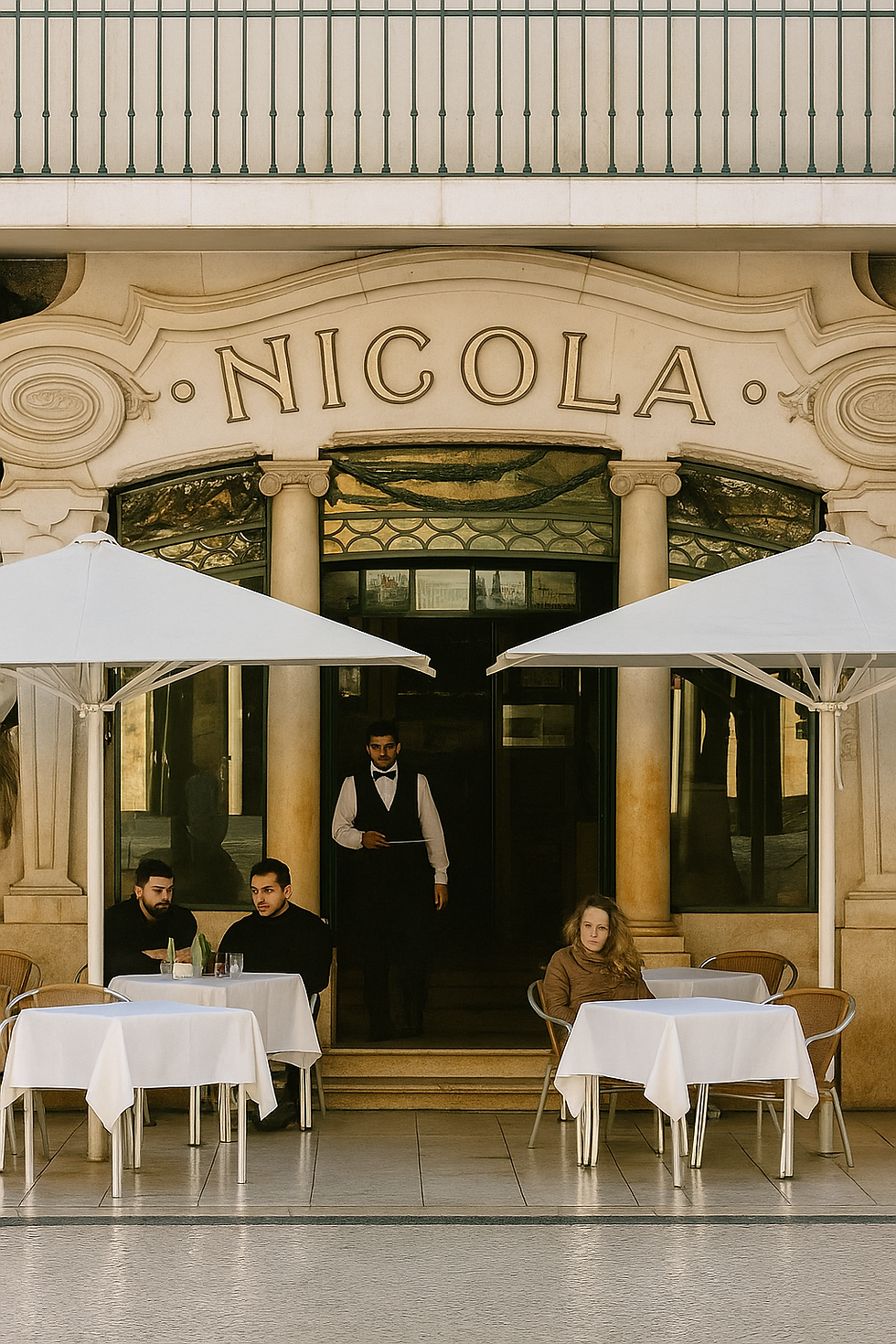
Café Nicola - Opened over 200 years ago, with a beautiful Art Café Deco façade, Nicola has become one of the most famous coffee shops in Lisbon.
Bastardo - Cool & Hip, in the Internacional Design Hotel creatively reimagines Portugal's culinary traditions, featuring the freshest local seafood and sushi. Both the restaurant and the adjacent bar are open to the public.
Delfina - Delfina is the house restaurant at the chic AlmaLusa boutique hotel. Small plates or mains draw locals and visitors alike.
Gambrinus - Around for almost nine decades, Gambrinus has plenty of historical drama in its decor, including arched wooden ceilings and stained-glass depictions of beer-swilling royals. Local seafood are the stars: prawns, lobster, and crab and seasonal choices like sea bream, sea bass, and sole.
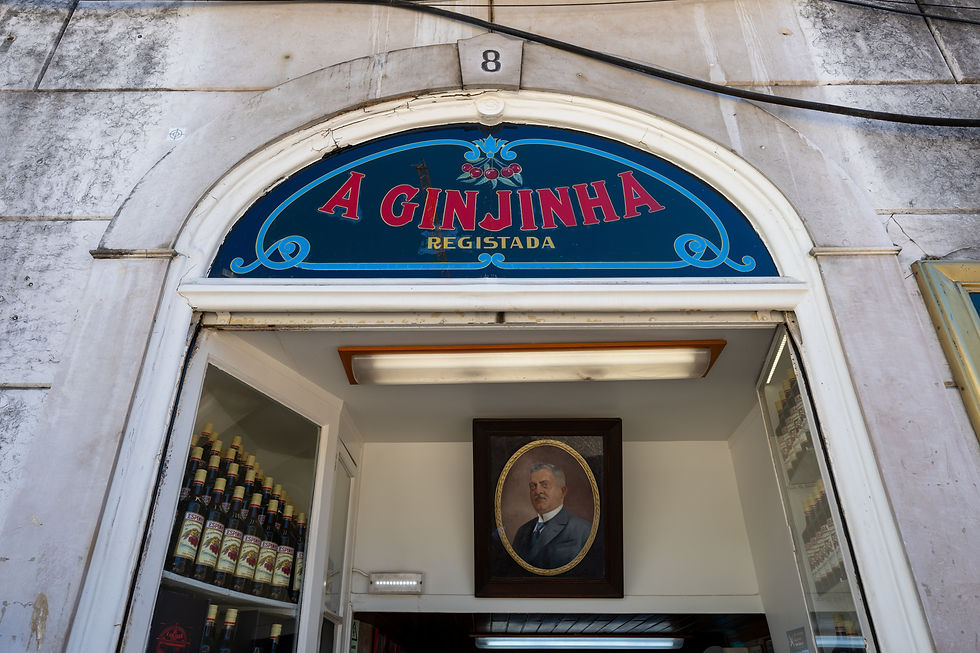
A Ginjinha Espinheira - A tourist attraction in its own right, this tiny bar just off Rossio square is the best place in Baixa to sample Lisbon's famous ginjinha; Cherry Liqueur. Open since 1840, when the Galician Francisco Espinheira became the first purveyor of the spirit in Lisbon, the bar serves the sweet drink with or without cherries.
Restaurant Sala - It's not easy to find genuinely excellent food in Baixa, but this restaurant—so small you can see into the kitchen from the entrance—has put the area on the map thanks to João Sá, whose modern Portuguese cuisine won him a Michelin star in 2024. He draws on Asian cuisines to create tasting menus that excite both visually and in their combinations of flavors and textures.
Whether you’re sipping Ginjinha at a tiled bar or watching the city light up from the top of the Santa Justa Lift, Baixa offers the kind of moments that stay with you.
Our handpicked hotels, boutiques, and charming neighborhood finds - Where to Stay Guide.
Need a listing of highlights to plan your stay? - Lisbon Museums, Lisbon Churches, Street Art
We take a deep dive into the Lisbon culinary scene here - Lisbon - Where to Dine
Explore other districts here: Baixa, Alfama, Graça, Cais do Sodré, Principe Real, Chiado, & Bairro Alto
Running This Café Life involves time, hosting, and resources. Affiliate partnerships allow us to keep sharing in-depth travel guides, recipes, photography, and cultural stories with you for free.
If you’ve walked this route - or plan to -
share your favorite stops with us in the comments


Comments