
HOW TO CHOOSE THE RIGHT KITCHEN KNIFE
Updated: Mar 8
A Practical Guide for Everyday Cooks
Choosing a kitchen knife isn’t about owning the “best” one — it’s about finding the tool that fits how you cook, how often you cook, and how much care you want to give it. The right knife feels natural in the hand, performs reliably, and earns its place through daily use.
This guide is designed to remove the guesswork. Rather than pushing a full knife set or professional jargon, it focuses on what actually matters: function, fit, and longevity.

At This Café Life, transparency matters. We want you to know that some of the links on our website are affiliate links. This means that if you click on a link and book travel, buy a product, or sign up for a service, we may earn a small commission — at no extra cost to you.
TWO KNIFE TRADITIONS, TWO APPROACHES
Most knives fall into one of two traditions. Neither is better — simply serve different cooking styles.
German Knife Tradition
German-style knives emphasize durability and balance. They are typically forged, slightly heavier, and designed for a rocking motion when chopping. The steel is more forgiving, making these knives easier to maintain and well suited to high-volume prep.
Best for: everyday home cooks, shared kitchens, frequent use, minimal fuss.
Japanese Knife Tradition
Japanese-style knives prioritize precision. Blades are thinner, lighter, and sharpened to a more acute angle, allowing for exceptionally clean cuts. These knives reward careful technique and benefit from more attentive care.
Best for: vegetable-forward cooking, fish preparation, cooks who enjoy precision and maintenance.
KNIFE CONSTRUCTION: WHAT ACTUALLY MATTERS
Understanding a few basics helps you choose wisely — without overthinking it.
Forged vs. Stamped
Forged knives are shaped from a single piece of steel, offering better balance and durability.
Stamped knives are lighter and often more affordable, but generally less robust.
For most home cooks, forged knives provide a better long-term experience.
Steel & Hardness
Harder steel stays sharp longer but requires more care. Softer steel is more forgiving and easier to sharpen. Neither is inherently better — the key is matching the steel to your habits.
Hollow Edge (Granton Edge)
Shallow indentations along the blade reduce friction and help food release cleanly. They’re especially useful when slicing vegetables or proteins.
Balance & Grip
A knife should feel stable and comfortable in your hand. Balance matters more than brand names or specs.
ESSENTIAL KNIVES — WHAT EACH ONE IS actually FOR
You do not need a full knife block to cook well. You need the right tools for the way you cook — and permission to skip the rest.

What it’s for - Peeling fruit, trimming vegetables, segmenting citrus, coring tomatoes, and small in-hand tasks.
When you actually need it - If you prep fresh produce often or cook with garlic, herbs, and citrus, this knife earns daily use.

What it’s for - Slicing fruit, sandwiches, cheese, and small cuts of meat — tasks that feel awkward with a chef’s knife.
When you actually need it - If you want one nimble knife for quick prep or find chef’s knives cumbersome.

What it’s for - General-purpose prep: chopping vegetables, slicing meat, crushing garlic, and most everyday kitchen tasks.
When you actually need it - If you cook regularly and want one knife that can handle nearly everything.

What it’s for - Precision slicing and push-cutting, especially vegetables, fish, and boneless proteins.
When you actually need it - If you prefer lighter knives and clean, straight cuts over rocking motions.

When you actually need it - If you eat bread regularly or want clean tomato slices without crushing.

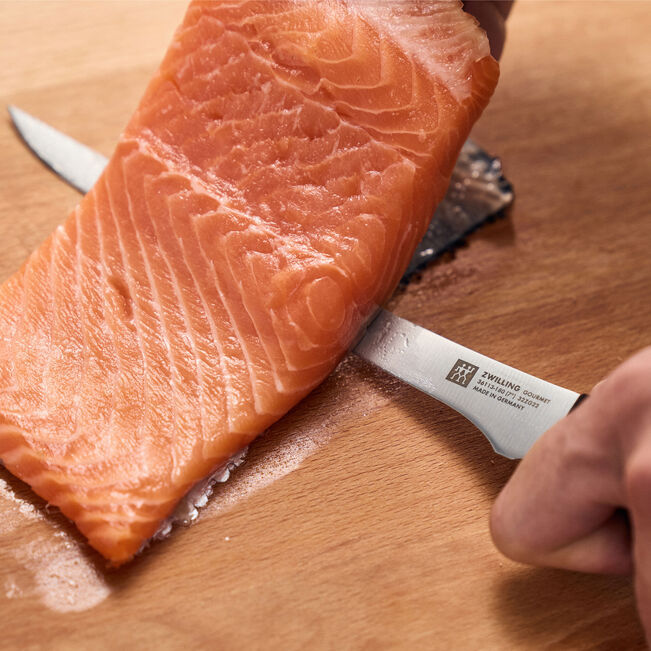
What it’s for - Skinning and filleting fish, removing rib bones, trimming delicate proteins, and slicing gravlax or smoked salmon paper-thin.
When you actually need it - If you cook whole fish, prepare seafood regularly, or care about clean, precise fillets without tearing the flesh.


When you actually need it - If buying whole cuts and breaking them down or carving is part of your culinary practices.
GOOD / BETTER / BEST: CHOOSING BY USE, NOT STATUS
Rather than pushing one “right” choice, this framework helps match knives to real kitchens.
Accessible, dependable knives designed for everyday home cooking. Lighter in hand, easy to maintain, and ideal for cooks who want quality without complexity.
BETTER: Zwilling
Forged German knives with excellent balance and durability. Built for frequent use and long-term reliability — a strong choice for serious home cooks.
KNIFE CARE: HOW TO MAKE ANY KNIFE LAST
Even the best knife fails if mistreated.
Storage
Use a magnetic strip, blade guards, or a horizontal knife block. Avoid loose drawers.
Cleaning
Hand wash only. Dry immediately. Never soak or use the dishwasher.
Honing vs. Sharpening
Honing realigns the edge — do this regularly.
Sharpening removes steel — do this occasionally.
For most home cooks, sharpening once or twice a year is enough.
FINAL THOUGHT
Good knives don’t announce themselves. They earn trust through repetition — the way they feel in the hand, the way they cut without resistance, and the way they quietly support daily cooking.
The best knife is the one that fits your kitchen, your habits, and your rhythm — and gets used often.
Chef’s Selections

Once you understand how knives work — and which ones suit your kitchen — choosing becomes simpler. Not every cook needs the same tools, but every kitchen benefits from a few well-chosen ones.
Running This Café Life involves time, hosting, and resources. Affiliate partnerships allow us to keep sharing in-depth travel guides, recipes, photography, and cultural stories with you for free.


Comments