
Bistro At Home: Burgundy Edition
Updated: Mar 8

A Place Built by Terroir
Burgundy sits in the heart of eastern France — between Paris and Lyon, a slender vertical corridor stitched together by vineyards, river valleys, and medieval towns. To the west lies the Morvan Forest, dense and wild. To the east, the Saône River runs like a silver thread. Burgundy is central — a region defined more by its soil than by its skyline. Here, terroir isn’t a concept. It is the governing force.
Burgundy’s landscape is fractured in the most beautiful way — hills, slopes, exposures that shift by meters and change everything. One vineyard produces Pinot Noir that tastes of cherry and limestone, and fifty steps away the vines yield something darker, earthier, more brooding. The soil moves from chalk to clay to iron-rich marl the way language changes between villages.
The Burgundy Table
The same earth that balances Pinot Noir also feeds mustard seed, deep-rooted herbs, and grazing cattle. Terroir isn’t simply what grows —it shapes what people cook, how they cook, and the tools they use. There are places where food and landscape are inseparable — Burgundy is one of those places.

This installment of our Bistro at Home series celebrates Burgundy’s most evocative flavors. We’ll cook, we’ll sip, and we’ll travel — from your kitchen stove to Beaune’s open-air market, to cellar doors in Vosne-Romanée, to the quiet charm of Dijon where mustard has been perfected for centuries.
This post contains affiliate links. If you purchase through these links, we may earn a small commission at no additional cost to you.
Dishes that define the region:
Simple ingredients. Deep technique. A philosophy of do less but do it slowly and well.
Bœuf Bourguignon — beef braised in red wine + lardons + time
Escargots à la Bourguignonne — garlic, butter, parsley, sizzling shells
Coq au Vin — chicken, mushrooms, pearl onions, Burgundy red
Moules Dijonnaises — steamed in white wine with cream + Dijon mustard — sharp, silky
Soupe à l’Oignon Gratinée — French Onion Soup
Gougères — airy cheese-puff perfection
Epoisses — strong, unforgettable monastery cheese


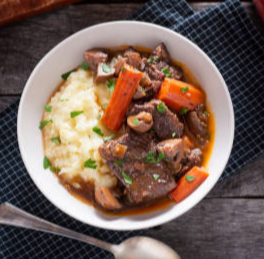

Slow food wasn’t invented in Burgundy — it was simply never abandoned.
Many of the dishes that define Burgundy cooking—slow braises, garlic butter escargot, and wine-based sauces—are the foundation of classic French bistro cuisine. If you enjoy these dishes, you’ll find more recipes, tools, and table inspiration in our Bistro at Home collection, where we explore the techniques and traditions behind everyday French cooking. →
Heritage of Burgundy
Craft as Culture - Where ingredients become identity, and makers hold history. Burgundy is not only wine. It is what happens when a region remembers how to make things — slowly, carefully for generations.


La Moutarderie Fallot
The Last Stone-Ground Mustard House
Mustard in Burgundy is not a condiment. It’s a craft. At Fallot, mustard seeds are still crushed on slow-turning stone wheels, preserving volatile oils, heat, and aroma. The technique has barely changed since the 1800s.
Signature expressions:
• Traditional Dijon — sharp, clean, mineral heat
• Whole grain Moutarde Ancienne — texture + history in every spoon
• Honey, walnut, tarragon — modern riffs with old-world backbone

Whether you're planning a weekend escape, a culinary getaway, or an extended journey, finding the right accommodations sets the tone for the entire trip. We recommend browsing options through Expedia, where you can compare hotels, boutique properties, vacation rentals, and flexible booking options in one place. Explore current rates, seasonal offers, and traveler reviews to secure a stay that fits both your itinerary and your style.
The Wines of Burgundy
Burgundy is built on two grapes — just two — yet produces some of the most complex wines in the world:


Neutral oak (texture without heavy toast)
French oak or Limousin (for hazelnut, brioche, rounded length)
The Regions
Names That Carry Weight
Burgundy is carved into five major wine zones:
Côte de Nuits — Red Wine Royalty

Deep, perfumed Pinot Noir with structure.
Notable Villages:
Vosne-Romanée — silk, spice, perfection; the holy ground
Gevrey-Chambertin — power, earth, black cherry
Chambolle-Musigny — texture like lace
Nuits-Saint-Georges — firm, savory, cellar-worthy
Grand Crus
Romanée-Conti (Vosne-Romanée) — rarity, silk, spiritual intensity
La Tâche (Vosne-Romanée) — deep spice, velvet, endless finish
Chambertin (Gevrey-Chambertin) — muscle, earth, black fruit command
Clos de Vougeot (Vougeot) — walled vineyard, monastic history, complexity

Côte de Beaune — Queens of Chardonnay
Round, mineral-driven whites with longevity.
Meursault — hazelnut, buttered brioche, toasted almond
Puligny-Montrachet — saline, architectural, precise
Chassagne-Montrachet — weight + elegance in balance
Corton-Charlemagne — alpine freshness, age-worthy focus
Bâtard-Montrachet — richness, weight, honeyed depth
Beaune — vibrant fruit, historic Grand Crus
Chevalier-Montrachet — stone-etched elegance, soaring minerality
Montrachet (Puligny + Chassagne) — perfect equilibrium; power, purity

Chablis
Liquid Stone & Oyster Shells
Chablis is Chardonnay in its most naked form — cold, chiseled, saline.The soil here contains ancient, fossilized oyster beds, and the wines taste like it: razor–sharp acidity, flint, and chalk, with citrus at the core.
Notable Appellations + Expressions:
Petit Chablis — youthful, bright, easy-drinking
Chablis — classic mineral backbone + green apple
Premier Cru Chablis — depth, river-stone elegance
Grand Cru Chablis — layered, powerful, age-worthy with electric tension
Chablis is Chardonnay stripped of makeup — pure, clear, unforgettable with oysters.

Côte Chalonnaise
Honest Wines, Bistro Heart
South of the Côte d’Or, the Côte Chalonnaise offers value-driven wines with rustic charm. The reds are fruit-forward and supple; the whites show orchard fruit, honeyed edges, and warm stone.
Villages to Know:
Rully — crisp Chardonnay + lively Crémant
Mercurey — juicy, structured Pinot Noir; classic bistro red
Givry — aromatic Pinot with spice + cherry
Montagny — white-only appellation; floral, mineral, elegant
These are the wines poured in French homes on weeknights — real, approachable, soulful.
Mâconnais — Sun, Softness & Southern Warmth
Further south, the Mâconnais drinks warmer — more sunlight, riper fruit, fuller texture. Chardonnay here leans golden: peach, pear, honeyed stone, and sometimes a touch of cream.
Key Villages & Styles:
Mâcon-Villages — friendly, floral, easy to love
Saint-Véran — generous orchard fruit with stony lift
Viré-Clessé — citrus + white flowers with elegant line
Pouilly-Fuissé — the star; rich yet mineral, layered, age-worthy
Notable Exceptions

Beaujolais
Burgundy’s Southern Expression, Yet Entirely Its Own
Just below the Mâconnais lies Beaujolais — a region often associated with Burgundy, but never confused for it. Administratively, it falls under the greater Burgundy wine zone, sharing cultural routes, markets, and centuries of trade. Yet the wines themselves speak a different dialect. Where Burgundy centers Pinot Noir and Chardonnay, Beaujolais is Gamay country — lighter, juicier, more floral. Granite soils add lift and brightness; carbonic maceration lends softness and pure fruit.
Crémant de Bourgogne
Bubbles Without Ceremony
Traditional-method sparkling wine produced throughout Burgundy, often from the same grapes that make the region’s still wines — primarily Chardonnay and Pinot Noir.
TRAVEL GUIDE

For Food & Wine Travelers
Where to Stay
Beaune — wine capital, charming, walkable
Dijon — mustard, markets, museums, bistros
Nuits-Saint-Georges — vineyard in every direction
Must-Do Culinary Stops
Tour cellar caves in Beaune
Taste Époisses at the source (warning: addictive)
Morning boulangerie run — buy two just in case
Dinner of boeuf bourguignon in a candlelit bistro
Vineyard walks through the Côte d’Or (golden in autumn)
Dijon mustard boutiques — sample aged, herbed, seeded, truffle-infused
If You Only Do One Thing:
A long, lazy tasting afternoon in Beaune — Pinot in the glass, stone underfoot, nothing on your agenda except another pour.
Burgundy rewards patience — in wine, in cooking, in travel. It invites you to slow down, pour generously, and taste what the earth remembers. Whether your first step is a braised stew simmering in Burgundy clay, a spoon of stone-ground mustard, or a glass of Meursault shared slowly, you are already on the road.
Your kitchen is the beginning. The road to Beaune waits whenever you’re ready.


Comments